An automatic start
Connect power and network access. The basestation updates its firmware and starts a Precise Point Positioning (PPP) survey automatically.
 Let’s talk
An RTK corrections base station built for autonomous vehicles and robotics, with automatic provisioning, PPP surveying and flexible power and connectivity.
Preliminary specifications · Rev 0.1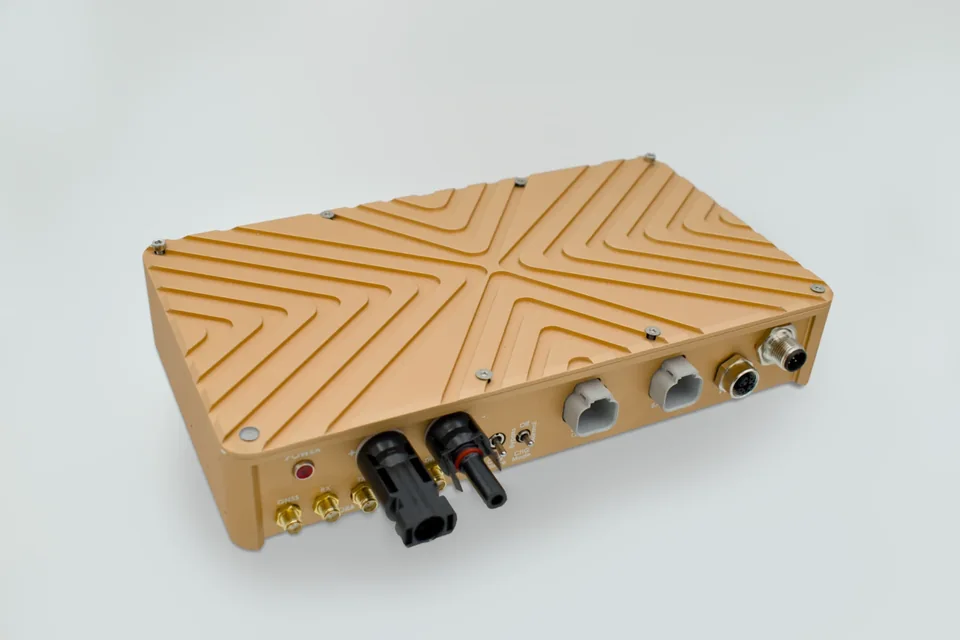
A dedicated reference station for autonomous vehicles and robotics. Install at a fixed location and deliver corrections through your wired or cellular network.
Connect power and network access. The basestation updates its firmware and starts a Precise Point Positioning (PPP) survey automatically.
Use 802.3at PoE, 9-36 V DC or solar input. Integrated solar charging supports a 12 V battery.
Send RTCM corrections over MQTT or NTRIP using Ethernet or built-in LTE Cat 4 cellular connectivity.
The basestation provisions itself and automatically updates its firmware.
A PPP survey establishes the station's fixed reference position.
RTCM output starts immediately using the Rapid PPP survey solution, over MQTT or NTRIP.
The station transitions to RTCM corrections based on the completed Final PPP survey solution.
Rapid and Final describe the PPP survey solution used for the base reference position. Corrections are delivered as RTCM in both stages. No fixed time to the initial Rapid solution is specified.
Dedicated connections for power, antennas, network access and local service, with wall, DIN rail and rack mounting options.
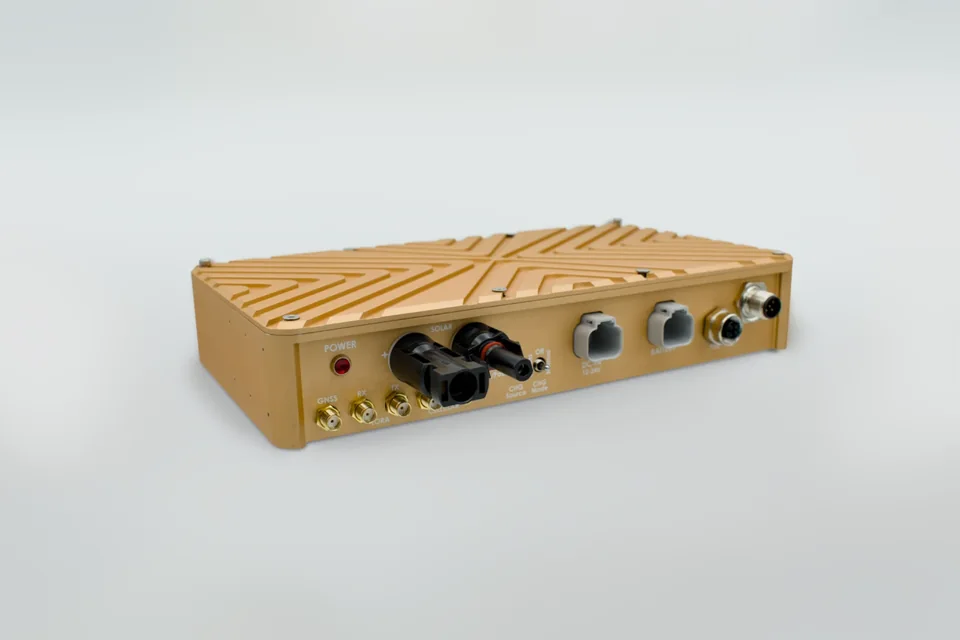
Connect a compatible external GNSS antenna.
Connect both ports to compatible 4G cellular antennas when using LTE.
Antenna connections for dual LoRa functionality.
Wired network connectivity and 802.3at PoE input.
Local configuration and firmware updates.
Dedicated 9-36 V DC input.
Separate connection for charging a 12 V battery.
Solar power input for the integrated charging function.
Charging source and charging bypass control battery-charging behavior.
Indicates that power is connected.
Functional connection reference. This datasheet does not define connector pinouts or charging-switch positions.
| Function | Fixed GNSS/GPS RTK corrections base station |
|---|---|
| GNSS receiver | u-blox X20P |
| Controller | STM32 high-performance MCU |
| Survey method | Automatic Precise Point Positioning (PPP) survey |
| Survey stages | Rapid, followed by Final after roughly two weeks |
| Corrections | RTCM over MQTT or NTRIP |
| Wired network | Ethernet via M12 X-coded, 8-pin connector |
|---|---|
| Cellular modem | Telit CMB1004, LTE Cat 4 |
| Cellular antenna ports | 2 x SMA; both require compatible 4G antennas when cellular is used |
| LoRa | Dual radio functionality; 2 x SMA antenna ports |
| Provisioning | Zero Touch Provisioning; automatic firmware update and survey start |
| Local service | Configuration and firmware updates via M12 A-coded, 5-pin connector |
| PoE input | IEEE 802.3at |
|---|---|
| DC input | 9-36 V DC; dedicated Deutsch DT 2-pin connector |
| Solar input | Standard solar connectors |
| Battery charging | Integrated solar charger for a 12 V battery |
| Battery charge output | Dedicated Deutsch DT 2-pin connector |
| Charging controls | Charging-source toggle and charging-bypass toggle |
| Power indication | Front red LED indicates connected power |
| Mounting | Wall, DIN rail or rack |
|---|---|
| GNSS antenna port | 1 x SMA; compatible external GNSS antenna required |
| Ingress protection | IP66 design target; not IP rated or certified |
| Device temperature range | Pending system-level validation |
| Receiver temperature | u-blox X20P: -40 to +85 °C (manufacturer specification) |
| Dimensions & mass | Not yet specified |
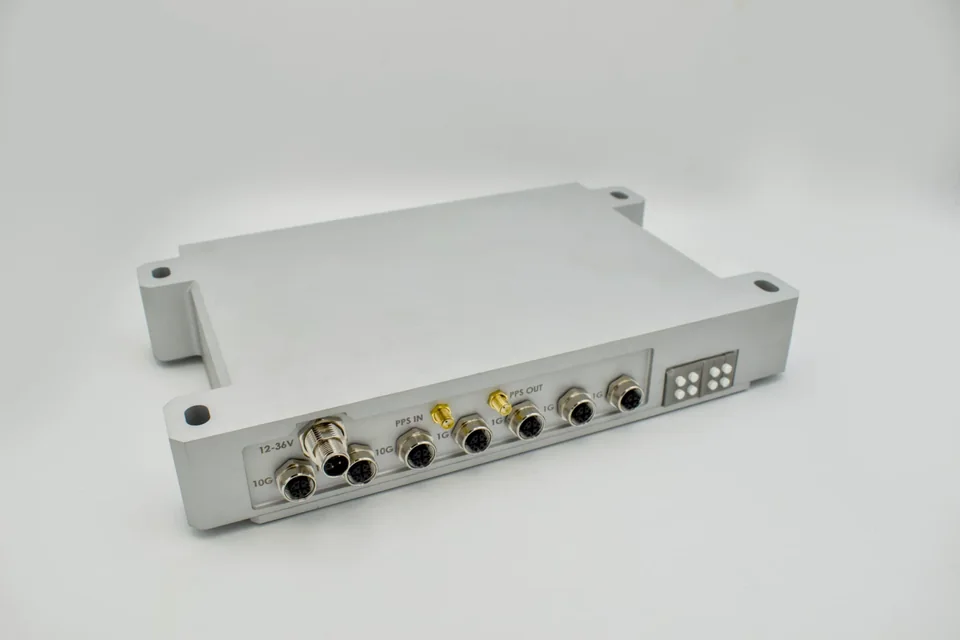
A 15-port in-vehicle network switch combining 10 Gigabit, Gigabit and automotive Ethernet, with PPS timing connections and Microchip VelocityDRIVE software.
Explore product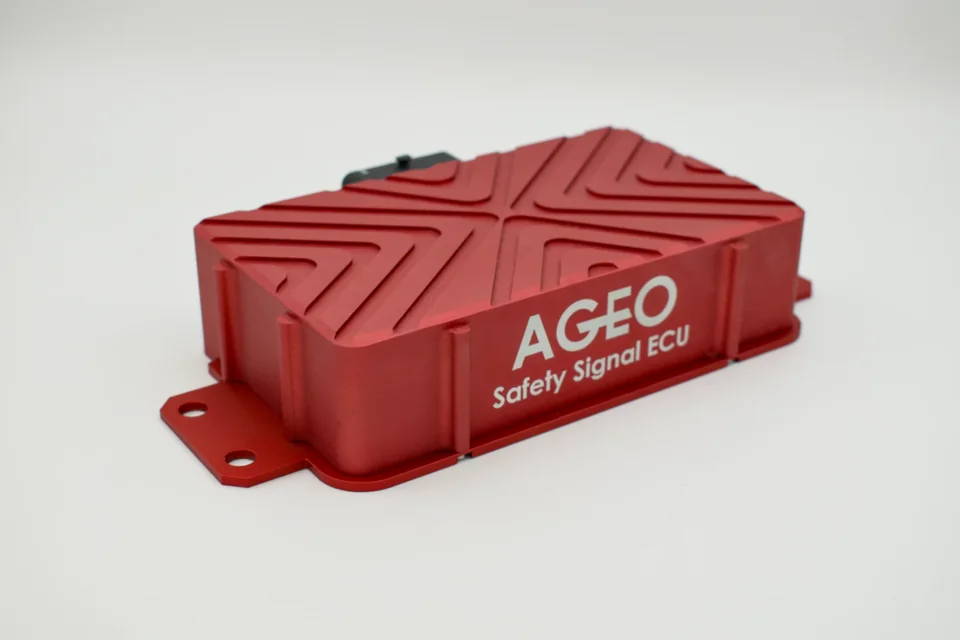
A ruggedized ECU for audio and visual signaling around autonomous vehicles, supporting up to four RGBW lights and two speakers per unit.
Explore productA fully custom Electronic Logging Device for off-highway vehicles. Combine centimeter-level RTK GNSS positioning, two CAN-FD channels and wireless connectivity in a durable machined aluminum enclosure.
Explore productA fully custom u-blox X20P GNSS receiver with centimeter-level RTK positioning, flexible power and CAN connectivity. Get corrections independently over 4G LTE or through your vehicle network.
Explore productDiscuss GNSS Basestation specifications, integration requirements, and availability with AGEO.
Request info